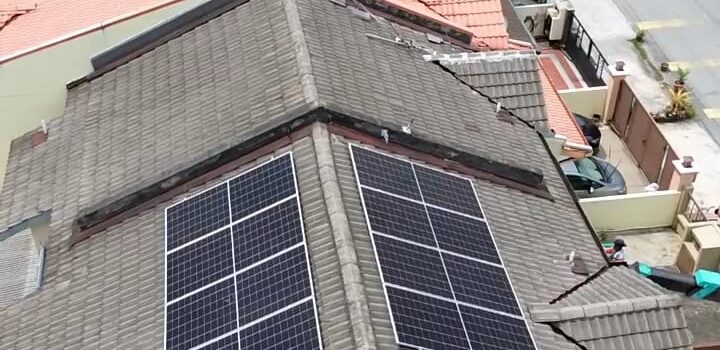
Singapore may be a small island, but it sits just one degree north of the equator, which means it receives an average of 2,400 hours of sunshine every year. For landed homeowners, that is an enormous and largely untapped resource sitting right on top of their roofs. As electricity tariffs climb and environmental awareness grows, more and more owners of terrace houses, semi-detached homes, and bungalows are turning to solar photovoltaic systems not just as a green statement, but as a serious financial decision.
Why Landed Properties Are Ideal for Solar
Unlike HDB flats and condominiums, landed homeowners own their rooftops, giving them full control over installation decisions without needing MCST approval or sharing roof space with other residents. This is a significant practical advantage. Condo dwellers must navigate management council bureaucracy and compete for limited shared roof space, while landed homeowners can simply engage a licensed solar installer and get moving.
Bungalows, semi-detached houses, and terrace homes typically receive unobstructed sunlight for most of the day, and Singapore’s location near the equator supports consistent sunshine year-round. More roof space translates directly into more panels, more generation capacity, and greater savings. Landed homes in Singapore typically consume 800 to 3,000 kWh or more per month, and the higher the consumption, the more solar saves.
System Size and Generation Capacity
Most landed homes in Singapore require systems between 3 kWp to 10 kWp, depending on household consumption and roof size. The table below summarises what you can expect from different system sizes.
| System Size | Est. Monthly Generation | Suitable For | Bill Offset |
|---|---|---|---|
| 3 kWp | 330–350 kWh | Small terrace house | 30–40% |
| 6 kWp | 700–750 kWh | Semi-detached home | 50–65% |
| 8 kWp | 950–1,000 kWh | Larger semi-detached | 65–80% |
| 10 kWp | 1,100–1,200 kWh | Bungalow or large terrace | Up to 80–100% |
How Much Does It Cost?
As of 2025, the average solar system for a landed property in Singapore ranges from S$18,000 to S$35,000, depending on size, roof configuration, and equipment type. The table below provides a general cost guide by system size.
| System Size | Estimated Cost | Cost per kWp | Est. Annual Savings |
|---|---|---|---|
| 3 kWp | S$6,000–S$9,000 | S$2,000–S$2,800 | S$1,200–S$1,500 |
| 6 kWp | S$12,000–S$17,000 | S$2,000–S$2,800 | S$2,400–S$3,000 |
| 8 kWp | S$16,000–S$22,000 | S$2,000–S$2,800 | S$3,200–S$4,000 |
| 10 kWp | S$20,000–S$28,000 | S$2,000–S$2,800 | S$4,000–S$5,000 |
Most homeowners recover their investment in 5 to 7 years through electricity bill savings, after which the energy the system generates is essentially free for the next 20 or more years.
Financing Options: Comparing Your Choices
For homeowners who do not wish to pay the full sum upfront, there are three main routes: cash, bank loan, or a rent-to-own plan. Each has a distinct financial profile and suits different situations.
| Feature | Cash Purchase | Bank Green Loan | Rent-to-Own |
|---|---|---|---|
| Upfront Payment | Full cost | S$0 (100% financed) | S$0 |
| Monthly Commitment | None | Loan instalment | Fixed monthly fee |
| System Ownership | Immediate | Upon full repayment | At end of term |
| Interest Cost | None | Yes | Built into fee |
| Maintenance Responsibility | Homeowner | Homeowner | Provider included |
| Best For | Cash-rich homeowners | Long-term ownership focus | Budget-conscious buyers |
Bank Green Loans
Banks like UOB and OCBC have integrated solar financing into their green product suites, and these are often the most cost-effective routes for those who want full ownership of their energy savings. DBS via its Green Loan, OCBC via its Eco-Care Loan, and UOB via its U-Solar Programme offer interest rates ranging from 2.5% to 4.5% per annum, with loan tenures of up to 5 years.
| Bank | Product Name | Interest Rate (p.a.) | Max Tenure | Notable Feature |
|---|---|---|---|---|
| DBS | Green Loan | 2.5%–3.5% | Up to 5 years | Linked to green home financing suite |
| OCBC | Eco-Care Loan | 2.8%–4.0% | Up to 5 years | Rewards energy-efficient borrowers |
| UOB | U-Solar Programme | 3.0%–4.5% | Up to 5 years | Proven solar track record across Southeast Asia |
To illustrate what a bank loan looks like in practice: a 10 kWp system costing S$20,000, financed at 3.5% per annum over 5 years, would result in a monthly instalment of approximately S$364. Given that the same system could reduce your electricity bill by S$300 to S$400 per month, the loan essentially pays for itself from day one through the savings it generates.
Solar panel loan rates in Singapore typically range from 3% to 5%, depending on the loan tenure and provider, and certain banks and green financing programmes may offer lower rates. It is worth getting quotes from multiple banks before committing, as terms and qualifying criteria can vary.
Rent-to-Own: Zero Upfront, Full Access
For homeowners who want to go solar immediately without any capital outlay, rent-to-own schemes have become an increasingly popular alternative. These programmes allow homeowners to start owning a solar system and enjoy the benefits of solar energy without any upfront cost, with a bundled monthly charge that covers unlimited maintenance servicing within the year, annual panel washing, system performance checks, fuse replacements, and inverter checks.
Starting with S$0 upfront capital, you can install a high-efficiency solar system and begin saving on your SP Group bills immediately. The monthly fee typically ranges from S$99 to S$250 depending on system size, and ownership of the panels transfers to the homeowner at the end of the contract term. This makes rent-to-own particularly attractive for homeowners who want immediate savings without touching their savings or taking on a bank loan.
The key trade-off is total cost over time. Because the monthly fee bundles financing, maintenance, and service into one package, you may pay slightly more in aggregate compared to an outright cash purchase. However, for many households the zero-risk, zero-hassle nature of the arrangement more than justifies the difference.
Selling Excess Power Back to the Grid
Regardless of how you finance the system, all landed homeowners with solar can participate in the Enhanced Central Intermediary Scheme (ECIS). The market rate for solar export is approximately S$0.09 to S$0.12 per kWh. Exporting 200 kWh per month could earn back S$24 monthly, adding over S$6,000 in system value across two decades. A bi-directional smart meter is installed after your system is commissioned, automatically measuring what you consume from the grid and what you export back.
Regulatory Requirements
All installations must be approved by the Urban Redevelopment Authority (URA) for visual and structural compliance, the Building and Construction Authority (BCA) for structural safety and rooftop integrity, and the Energy Market Authority (EMA) for systems connected to the grid. Only EMA-licensed contractors are permitted to carry out grid-connected installations. Reputable installers handle all paperwork on your behalf. Once approved, the physical installation typically takes 2 to 5 days, depending on system size.
Maintenance and Long-Term Value
Solar panels are remarkably low maintenance. Solar panels typically carry 25-year product warranties and 30-year performance guarantees, and the main maintenance expense over the system’s lifetime is an inverter replacement around the 12-year mark. In Singapore, rain naturally washes away dirt, so cleaning is rarely needed. However, if panels accumulate debris such as dust or bird droppings, it is good to check them every 6 to 12 months. Most systems come with a monitoring app, allowing you to track electricity generation in real time, and if production drops more than 15 to 20%, it may be time for a professional check-up.
Homes with solar systems tend to command higher valuations, especially among younger, sustainability-conscious buyers, and as carbon taxes and green building standards tighten, early adoption may yield additional financial advantages in future compliance scenarios.
Is Now a Good Time to Go Solar?
By almost every measure, yes. Budget 2026 raised Singapore’s national solar target from 2 GWp to 3 GWp, a 50% increase covering rooftop, floating, and building-integrated photovoltaic solar, ensuring continued government investment in grid infrastructure and a supportive policy environment. Panel prices have fallen, financing options have expanded, and electricity tariffs are not going down. For any landed homeowner in Singapore, solar panels now represent one of the most accessible, financially logical, and future-proof upgrades you can make to your home.